Skip to content
Modular Kitchen Cost in India: Complete Price Guide

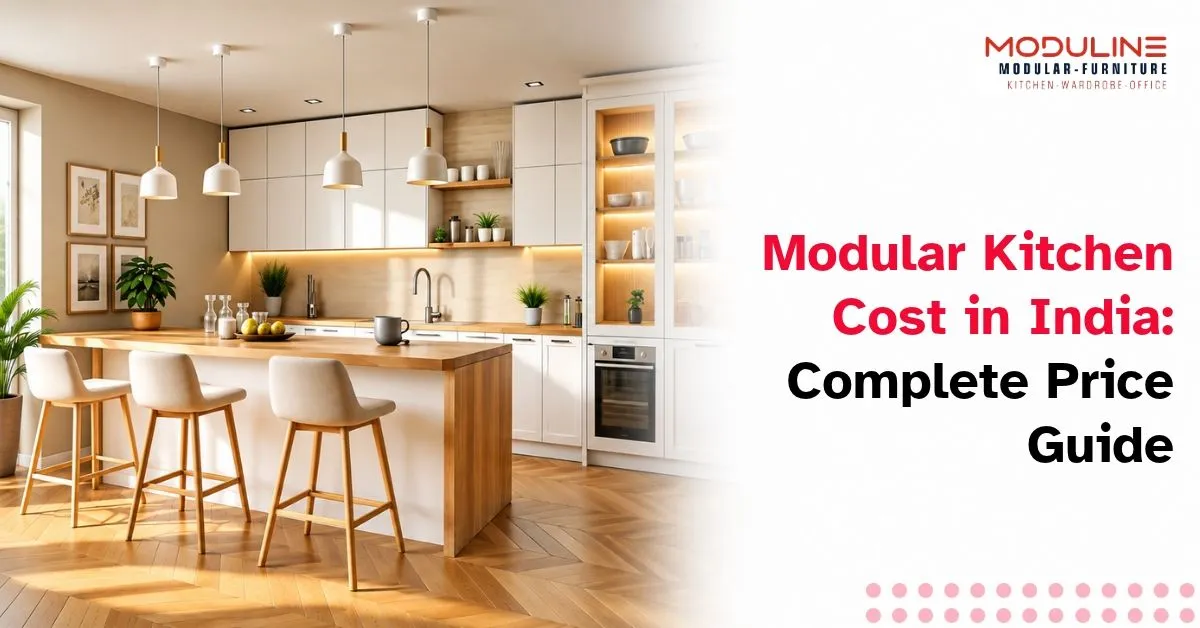
Planning a kitchen renovation requires more than selecting cabinets and finishes. The overall budget depends on the kitchen layout, materials, hardware, storage accessories, and level of customization. Understanding these factors before making a decision helps homeowners compare options and plan their spending effectively. A well-designed Modular Kitchen combines practical storage, efficient movement, durable materials, and a finish that suits the home’s interior.

1. What Is the Cost of a Modular Kitchen in India?

The cost of a Modular Kitchen varies according to the project specifications and selected materials. Basic designs with standard finishes generally require fewer premium features, while customized kitchens with advanced hardware and specialized finishes may cost considerably more.

For Moduline, the supplied price range starts at ₹1,200 per sq. ft. and can exceed ₹10,000 per sq. ft., depending on materials, finishes, hardware, and customization. The final estimate is provided after the design and requirements are discussed.

2. Factors That Affect Modular Kitchen Cost

Several elements influence the total kitchen budget. Understanding them helps you decide where to invest and which features are essential.

  • Kitchen layout: The arrangement of cabinets and available space affects the number of units required.
  • Material selection: Different cabinet materials offer varying characteristics, maintenance requirements, and costs.
  • Surface finishes: Laminates, acrylic, PU, and other finishes influence the appearance and overall price.
  • Hardware quality: Hinges, drawer channels, and other fittings affect functionality and the final quotation.
  • Storage accessories: Pull-outs, corner units, and pantry systems add convenience but may increase costs.

A carefully planned Modular Kitchen can balance these requirements without including unnecessary features.

3. How Materials and Finishes Affect the Price?

Materials and finishes influence the kitchen’s appearance, maintenance, and suitability for everyday use. The right choice depends on your budget and practical requirements. Selecting suitable Modular Kitchen materials can help balance durability, appearance, and overall project costs.

Material or finishKey characteristics
WPC and PVCWaterproof and termite-proof options recommended for farmhouses and high-termite areas
LaminatesCost-effective, with multiple textures and shades
AcrylicSmooth, high-gloss appearance
Acry-GlassModern, glass-like appearance with enhanced durability
Ceramic and back-painted glassStylish surfaces that are easy to clean
Lacquered and PUSmooth painted finishes
MembraneWrapped edges for a seamless appearance
Solid wood and veneerNatural wood appearance and texture
Stainless steelDurable and corrosion-resistant for heavy-use kitchens

Selecting finishes based on actual usage can help you avoid spending more on features that do not suit your needs.

4. How Hardware and Storage Accessories Affect Cost?

Hardware and accessories help determine how comfortably you can use the kitchen every day. While additional fittings can increase the initial cost, choosing them according to your cooking habits helps improve functionality. A well-planned Modular Kitchen combines practical hardware and smart storage features to improve accessibility and make everyday tasks more convenient.

Useful options include:

  • Tandem drawers for organized storage
  • Pull-out pantry units for accessing stored ingredients
  • Magic corner systems for making better use of corner cabinets
  • Tall units for additional storage capacity
  • Cutlery organizers for separating kitchen essentials
  • Soft-close hinges for controlled cabinet-door movement
  • Under-sink storage for organizing suitable cleaning supplies

Prioritize accessories that solve specific storage problems instead of adding every available feature.

Planning the right Modular Kitchen for your home? Contact us for customized designs based on your space, budget, storage needs, and style.

5. How to Plan Your Modular Kitchen Budget?

Before finalizing your design, list your essential requirements and decide which upgrades are worth the additional expense. Planning your Modular Kitchen budget carefully helps balance functionality, material quality, and overall costs.

  • Establish your budget before choosing finishes
  • Select materials according to your kitchen’s usage and maintenance needs
  • Prioritize functional cabinets and essential storage
  • Compare hardware and accessories based on their practical value
  • Request a detailed quotation covering materials, finishes, hardware, and installation

Reviewing these details helps you understand what is included and compare quotations more accurately.

Frequently Asked Questions

The cost varies depending on the design, materials, finishes, hardware, and customization.

Kitchen layout, cabinet materials, surface finishes, hardware quality, storage accessories, and customization all influence the final cost.

Laminates are a cost-effective option available in different textures and shades. The final choice should also consider maintenance and the desired appearance.

Yes. Accessories such as tandem drawers, pull-out pantry units, and magic corners can increase the price depending on the selected features and specifications.

Start with essential storage and durable materials, prioritize useful hardware, avoid unnecessary accessories, and compare detailed quotations before finalizing the design.

Conclusion

Planning a kitchen budget begins with understanding the materials, finishes, hardware, and storage features you actually need. Comparing these elements before finalizing the design helps you make informed decisions and manage expenses. A thoughtfully customized Modular Kitchen can provide practical storage, convenient everyday use, and an appearance that complements your home.

Back To Top
WhatsApp chat