Skip to content
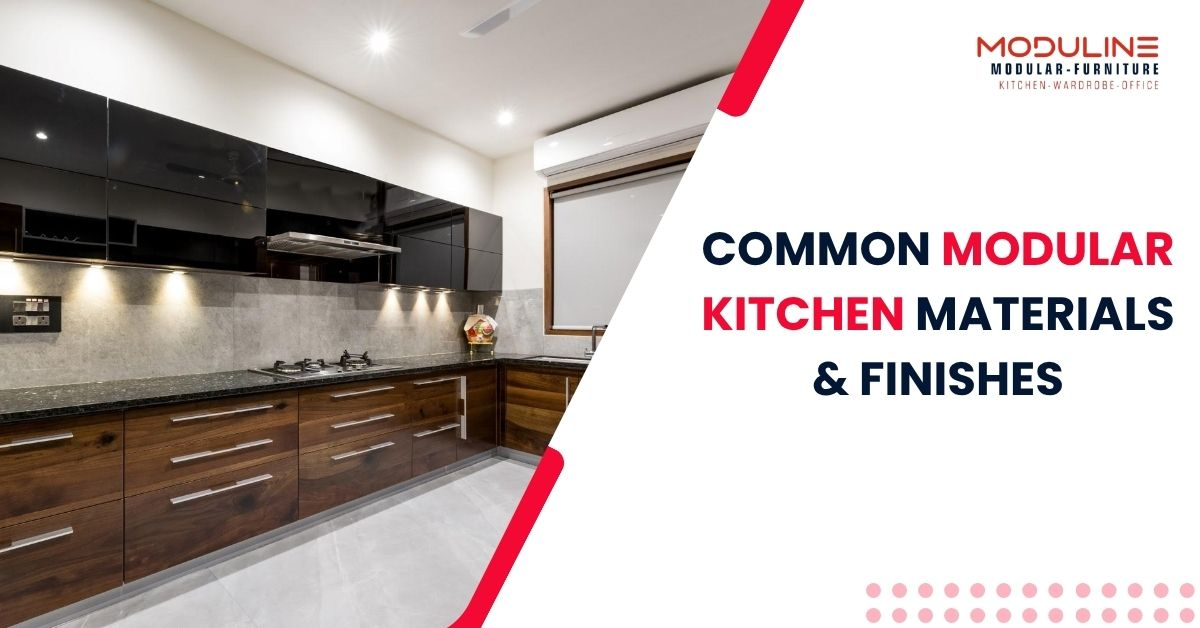
Common Modular Kitchen Materials & Finishes

Designing a kitchen requires careful planning, especially when it comes to selecting materials and finishes that can handle daily usage and environmental conditions. A Modular Kitchen is built using a combination of structural materials and surface finishes that directly affect durability, maintenance, and visual appeal. Choosing the right materials ensures that cabinets remain strong, resist moisture, and maintain their structure over time.

Apart from strength, materials also influence how well the kitchen adapts to long-term usage. Finishes, on the other hand, determine how the kitchen looks and feels in everyday use. A well-designed Modular Kitchen balances both aspects, ensuring that it is not only functional but also visually appealing and easy to maintain.

Common Materials for a Modular Kitchen

A Modular Kitchen relies on different materials to build its structure, including cabinets, shutters, and internal frameworks. Each material has its own properties related to strength, water resistance, and durability, making it important to select them based on kitchen usage and exposure conditions. Materials used in kitchens must withstand heat, moisture, and continuous handling without losing their quality.

Selecting the right material also impacts the long-term performance and maintenance of the kitchen. A well-planned Modular Kitchen uses a combination of materials to achieve both strength and cost efficiency. By understanding how each material behaves, homeowners can make better decisions that ensure reliability and durability over time.

MDF in Modular Kitchen

MDF is a widely used engineered wood product known for its smooth surface and uniform structure, making it suitable for decorative applications. In a Modular Kitchen, MDF is commonly used for cabinet shutters and panels where a clean, modern finish is required. Its smooth surface allows for easy application of paints and finishes, making it ideal for customized designs.

However, MDF is less resistant to moisture compared to other materials, so it should be used in areas with minimal exposure to water. When used correctly, MDF enhances the appearance of a Modular Kitchen while providing a cost-effective solution for stylish interiors.

Key points:

  • Smooth and uniform surface
  • Ideal for painted finishes
  • Cost-effective material
  • Best for dry areas

HDF in Modular Kitchen

HDF is a denser and stronger version of MDF, offering improved durability and resistance to wear and tear. In a Modular Kitchen, it is preferred for premium cabinets and shutters where strength and finish quality are important. Its higher density allows it to handle more stress, making it suitable for long-term usage.

In addition to strength, HDF provides a refined surface that supports high-quality finishes. Using HDF in a Modular Kitchen ensures better performance and a longer lifespan, especially in areas that experience regular use.

Key points:

  • High density and strength
  • Better durability than MDF
  • Smooth finishing surface
  • Suitable for premium designs

Commercial Plywood in Modular Kitchen

Commercial plywood is a commonly used material due to its affordability and structural strength. In a Modular Kitchen, it is used for cabinet bodies where moderate durability is required. It provides a strong base for kitchen structures and supports daily usage effectively.

Although it offers good strength, it is not fully water-resistant, so it should be used in areas with limited moisture exposure. A Modular Kitchen using commercial plywood can be both economical and functional when applied correctly.

Key points:

  • Strong structural support
  • Cost-effective option
  • Easy to handle and install
  • Suitable for dry areas

Marine Plywood in Modular Kitchen

Marine plywood is specially designed to withstand moisture and water exposure, making it one of the best materials for kitchens. In a Modular Kitchen, it is used in areas such as under-sink cabinets and base units where water contact is common. Its ability to resist swelling ensures long-term durability.

This material is treated to handle humid conditions, making it highly reliable in kitchen environments. Using marine plywood in a Modular Kitchen ensures stability, strength, and protection against water damage.

Key points:

  • Excellent water resistance
  • Long-lasting durability
  • Ideal for wet zones
  • Strong and stable

HDMR in Modular Kitchen

HDMR (High Density Moisture Resistant board) combines strength and moisture resistance, making it suitable for kitchen use. In a Modular Kitchen, it is used for cabinets and panels that require both durability and protection from humidity. It also offers resistance to termites and pests.

This material provides a balanced solution between plywood and MDF, offering better performance in challenging conditions. Using HDMR in a Modular Kitchen improves overall reliability and reduces maintenance issues.

Key points:

  • Moisture-resistant material
  • High durability
  • Termite-resistant
  • Suitable for cabinets

BWP in Modular Kitchen

BWP (Boiling Water Proof plywood) is one of the most durable materials available for kitchen applications. In a Modular Kitchen, it is ideal for areas exposed to high levels of moisture and water. It provides superior resistance compared to standard plywood.

Its strength and resistance make it suitable for long-term usage in demanding conditions. A Modular Kitchen built with BWP ensures durability, stability, and minimal maintenance over time.

Key points:

  • Boiling water resistant
  • Highly durable material
  • Long lifespan
  • Ideal for wet areas

Planning your Modular Kitchen with the right materials and finishes? Contact us today for expert guidance and customized kitchen solutions.

Finishes Used in Modular Kitchen

Finishes play a crucial role in defining the final appearance and feel of a Modular Kitchen, as they are applied to surfaces to enhance both aesthetics and protection. They help in improving resistance against scratches, stains, and moisture while also offering a wide variety of design options such as glossy, matte, textured, or natural looks.

Laminate Finish in Modular Kitchen

Laminate is one of the most widely used finishes due to its versatility and affordability. In a Modular Kitchen, it provides a durable surface that can handle daily wear and tear while offering a wide range of design options.

Key points:

  • Affordable finish
  • Wide color and texture options
  • Scratch-resistant surface
  • Easy to clean

Acrylic Finish in Modular Kitchen

Acrylic finish is known for its glossy and reflective surface, giving a modern and premium look. In a Modular Kitchen, it enhances brightness and creates a visually appealing space.

Key points:

  • High-gloss appearance
  • Premium finish
  • Reflective surface
  • Smooth texture

Glass Finish in Modular Kitchen

Glass finish adds elegance and a contemporary touch to kitchen cabinets. In a Modular Kitchen, it is used to create a clean and sophisticated design.

Key points:

  • Stylish and modern look
  • Reflective surface
  • Enhances aesthetics
  • Requires careful maintenance

Veneer Finish in Modular Kitchen

Veneer provides a natural wood look, making it ideal for high-end designs. In a Modular Kitchen, it adds warmth and richness to the overall appearance.

Key points:

  • Natural wood finish
  • Elegant appearance
  • Premium look
  • Needs maintenance

Lacquer Finish in Modular Kitchen

Lacquer finish offers a smooth and polished surface with a refined appearance. In a Modular Kitchen, it is used for modern and high-end designs.

Key points:

  • Smooth finish
  • Contemporary look
  • High-quality appearance
  • Premium option

Frequently Asked Questions

Marine plywood and BWP are best for cabinets due to their high water resistance, durability, and ability to withstand long-term moisture exposure in kitchen environments.

MDF is smoother and cheaper, while HDF is denser, stronger, and more durable, making it suitable for premium kitchen applications and long-term usage.

Acrylic and laminate finishes are best for modern kitchens as they offer sleek appearance, durability, easy maintenance, and a wide range of design options.

HDMR offers better moisture resistance and termite protection, but plywood provides stronger structural support, making both suitable depending on kitchen requirements and usage conditions.

Laminate finish requires the least maintenance as it is scratch-resistant, easy to clean, durable, and suitable for daily kitchen usage without special care requirements.

Choose based on moisture exposure, budget, durability needs, and usage to ensure long-term performance, strength, and efficiency in your kitchen space.

Conclusion

Selecting the right materials and finishes is essential for building a durable, efficient, and visually appealing Modular Kitchen. Each material contributes to the strength and performance of the kitchen, while finishes enhance its overall design and usability.

By understanding the properties and applications of each option, homeowners can make informed decisions that suit their needs and budget. A well-planned Modular Kitchen ensures long-term durability, better functionality, and an enhanced living experience.

Back To Top
WhatsApp chat